In the rapidly evolving world of manufacturing, two technologies dominate discussions about modern production methods: CNC precision machining and 3D printing. Both offer unique advantages and cater to different needs within industries ranging from aerospace to healthcare. Understanding their differences is crucial for businesses and engineers looking to choose the right production method for their specific applications.
What is CNC Precision Machining?
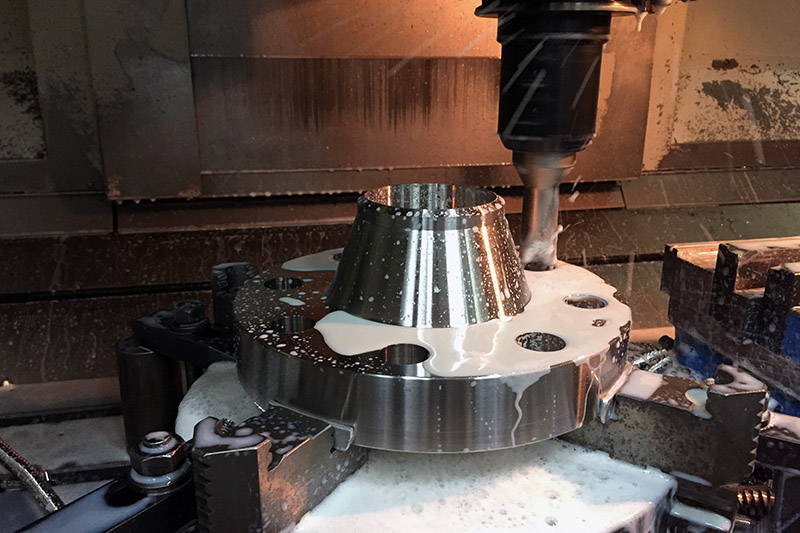
CNC precision machining refers to the use of computer-controlled machines to remove material from a workpiece to create a desired shape or component. This subtractive manufacturing process relies on high-precision tools, including lathes, mills, and routers, guided by computer-aided design (CAD) software. CNC precision machining is known for producing parts with tight tolerances, superior surface finishes, and excellent mechanical properties.
The process begins with a digital 3D model, which is converted into machine code that instructs the CNC equipment on the exact movements required to shape the material. Metals, plastics, and composite materials can all be machined, making CNC precision machining highly versatile. This technology is particularly valued for parts that demand high structural integrity, such as aerospace components, automotive parts, and medical devices.
What is 3D Printing?
3D printing, also known as additive manufacturing, is a process that builds objects layer by layer from digital models. Unlike CNC precision machining, which removes material, 3D printing adds material, usually in the form of thermoplastics, resins, or metal powders, to create the final product. The process is controlled by computer software that slices the 3D model into thin layers and guides the printer to deposit or fuse material precisely.
3D printing has revolutionized prototyping and low-volume production because it allows rapid iteration of designs and highly complex geometries that would be difficult or impossible to achieve with traditional machining methods. Industries such as medical implants, custom consumer products, and aerospace are leveraging 3D printing for its flexibility and speed.
Key Differences Between CNC Precision Machining and 3D Printing
Manufacturing Process
The most fundamental difference between CNC precision machining and 3D printing lies in their manufacturing approach. CNC precision machining is subtractive, cutting away material to shape a component. In contrast, 3D printing is additive, building up material layer by layer to form the object.
This distinction affects many aspects of production, including the materials that can be used, the complexity of designs, and the surface finish of the final product. CNC precision machining generally provides smoother surfaces and higher dimensional accuracy, whereas 3D printing allows more intricate geometries and internal structures that are difficult to machine.
Material Selection and Properties
CNC precision machining can work with a broad range of materials, including metals like aluminum, titanium, and stainless steel, as well as plastics and composites. The mechanical properties of machined parts are typically superior because the material is dense and intact throughout the component. 3D printing, on the other hand, often has limitations in material strength, particularly with plastics, and metal parts produced through additive methods may require additional post-processing to achieve desired mechanical properties.
Production Speed and Volume
When it comes to production speed, the choice between CNC precision machining and 3D printing depends on the scale and complexity of the parts. CNC precision machining is faster for medium to large-scale production runs of simple or moderately complex parts. However, for prototyping or producing highly complex components, 3D printing can reduce lead times because it eliminates the need for specialized tooling or molds.
Cost Considerations
The cost structure of CNC precision machining differs significantly from 3D printing. CNC precision machining often involves higher initial setup costs due to tooling and machine programming but becomes cost-effective for large production volumes. 3D printing generally has lower initial costs, making it ideal for prototypes, small batches, and custom products. However, material costs for certain 3D printing processes, particularly metal additive manufacturing, can be higher than traditional machining.
Design Flexibility
3D printing offers unmatched design flexibility, allowing for complex geometries, hollow structures, and integrated assemblies that would be challenging or impossible with CNC precision machining. Conversely, CNC precision machining excels at producing parts that require precise tolerances, smooth finishes, and high structural integrity, which may be critical in engineering applications where safety and performance are paramount.
Applications of CNC Precision Machining
CNC precision machining is widely used across industries that demand high-quality, durable components. Aerospace and defense sectors rely on machined parts for engines, airframes, and critical mechanical systems. Automotive manufacturers use CNC precision machining for engine components, transmission parts, and suspension systems. Medical device manufacturers employ it to produce surgical instruments, implants, and diagnostic equipment with stringent accuracy requirements.
The ability to machine hard metals and composites with high precision ensures that CNC precision machining remains essential for industries where material strength, dimensional accuracy, and repeatability are non-negotiable.
Applications of 3D Printing
3D printing shines in applications where rapid prototyping, complex design, or customization is key. Medical applications, such as patient-specific implants, prosthetics, and surgical models, benefit from the ability to create custom geometries quickly. The aerospace industry uses 3D printing for lightweight components and intricate internal structures that reduce weight without compromising performance. Consumer products and electronics also leverage 3D printing for creating innovative designs that are not feasible with traditional machining.
Complementary Use of CNC Precision Machining and 3D Printing
Rather than viewing CNC precision machining and 3D printing as mutually exclusive, many manufacturers use them complementarily. For example, 3D printing can produce complex prototypes and concept models, which can then be optimized and produced in large quantities using CNC precision machining. Similarly, hybrid approaches can combine additive and subtractive methods, allowing manufacturers to exploit the benefits of both technologies in a single workflow.
Conclusion
Choosing between CNC precision machining and 3D printing ultimately depends on the specific requirements of the project, including material properties, complexity, production volume, and cost considerations. CNC precision machining excels in producing high-precision, durable parts with superior mechanical properties, making it indispensable in industries like aerospace, automotive, and medical devices. 3D printing, meanwhile, offers unparalleled flexibility for prototyping and complex designs, enabling rapid innovation and customization.
Understanding the differences between these two manufacturing techniques allows engineers, designers, and manufacturers to make informed decisions, optimize production workflows, and achieve the best results for their products. By recognizing the strengths and limitations of CNC precision machining and 3D printing, industries can leverage both technologies effectively, driving efficiency, innovation, and high-quality outcomes in modern manufacturing.
