Vacuum casting is an important manufacturing process for companies that need accurate prototypes, small production runs, and high-quality components without the cost and complexity of traditional mass-production methods. As product development becomes increasingly focused on speed, precision, and flexibility, businesses are turning to professional vacuum casting services to transform detailed designs into functional physical parts.
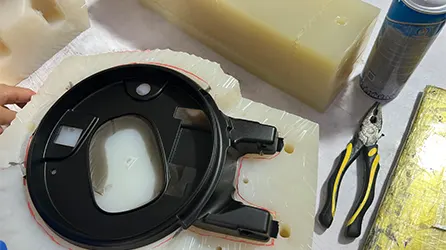
Vacuum casting uses a master model, usually produced through 3D printing or another precision manufacturing method, to create a silicone mold. Liquid polyurethane or other suitable casting materials are then introduced into the mold under vacuum conditions. This helps reduce air bubbles and improves the quality of the finished component. The process can reproduce complex shapes, surface textures, and fine details with impressive accuracy.
What Is Vacuum Casting?
Vacuum casting is a manufacturing technique designed primarily for producing prototypes and low-volume components. The process begins with a master pattern that represents the desired final product. A silicone mold is created around this pattern, and once the mold is prepared, casting material is poured into it under controlled vacuum conditions.
The vacuum environment helps remove trapped air from the casting material and mold cavity. This results in parts with cleaner surfaces, fewer defects, and better dimensional consistency.
Unlike some conventional manufacturing methods, vacuum casting does not require expensive metal tooling for every design. This makes it especially useful during product development, when designers may need several iterations before reaching a final version.
Faster Product Development
One of the biggest advantages of professional vacuum casting services is faster product development. Creating traditional production tooling can take considerable time, particularly when the component has a complex geometry.
Vacuum casting allows manufacturers to produce molds relatively quickly after the master model has been completed. This means businesses can move from digital designs to physical prototypes much sooner.
Rapid prototype availability allows engineers and designers to test dimensions, appearance, assembly, ergonomics, and functionality. If a problem is identified, the design can be modified and another version can be produced without starting an expensive large-scale production process.
Supporting Multiple Design Iterations
Product development rarely follows a perfectly straight path. A prototype may reveal problems that were not visible on a computer screen. Professional vacuum casting makes it easier to produce several design versions and compare them.
This flexibility can reduce development delays and help companies reach a refined product design more efficiently.
High-Quality Surface Finishes
Another major benefit of professional vacuum casting services is the ability to achieve high-quality surface finishes. The silicone mold can capture fine details from the master pattern, including textures, contours, logos, and other design features.
This makes vacuum casting particularly valuable when prototypes need to look similar to the intended final product. High-quality appearance can be important for presentations, customer evaluations, investor demonstrations, and internal design reviews.
Manufacturers can also select different casting materials and finishing techniques depending on the requirements of the application. Options may include different colours, textures, hardness levels, and surface treatments.
Cost-Effective for Low-Volume Production
Traditional injection molding can be highly economical when thousands or millions of identical components are required. However, the initial tooling investment can make it less attractive for prototypes and small production quantities.
Vacuum casting provides an alternative for low-volume manufacturing. Silicone molds generally require less investment than permanent production tooling, allowing businesses to produce limited quantities without committing to expensive molds.
This can be particularly useful for startups, engineering companies, product designers, and businesses testing a new product before entering full-scale manufacturing.
Reducing Financial Risk
Developing a new product involves uncertainty. Companies may not know how customers will respond to a product or whether design changes will be required.
Producing smaller batches through vacuum casting allows businesses to test their concepts before investing heavily in mass production. This can reduce financial risk and provide valuable information about product performance and market acceptance.
Excellent Detail Reproduction
Vacuum casting is capable of reproducing intricate design features with a high level of detail. This makes the process suitable for components that include curves, recesses, fine textures, and complicated geometries.
Professional manufacturers understand how material selection, mold design, vacuum conditions, and curing processes affect the final result. Their expertise helps ensure that detailed components are produced consistently.
For industries where appearance and dimensional accuracy are important, this level of detail can make vacuum casting an effective prototyping and manufacturing solution.
Material and Design Flexibility
Professional vacuum casting services can accommodate a range of material characteristics. Depending on the application, manufacturers may use materials that imitate properties such as rigid plastics, flexible rubber-like materials, or other specialized characteristics.
This flexibility allows designers to create prototypes that provide a more realistic representation of the intended product.
For example, a company developing a consumer product may need a rigid housing, while another project may require flexible components. Selecting an appropriate casting material helps engineers evaluate how a product will behave under practical conditions.
Functional Prototype Testing
A prototype should ideally do more than simply look attractive. Engineers often need to test whether a component fits correctly, interacts with other parts, or performs under specific conditions.
Vacuum casting can produce functional prototypes suitable for various evaluation purposes. Components can be assembled with other prototype parts, allowing teams to identify interference problems, dimensional issues, or design weaknesses.
Testing physical prototypes before mass production can prevent expensive mistakes later in the manufacturing process.
Improving Assembly Validation
Many products consist of multiple components that must fit together precisely. A small dimensional error can cause problems during assembly.
Vacuum-cast prototypes can help engineers verify component relationships before final production tooling is created. This provides an opportunity to adjust tolerances, mounting points, fasteners, and other design details.
Professional Expertise Matters
Although vacuum casting is a highly useful process, achieving consistent results requires technical knowledge. Professional manufacturers understand mold construction, material behaviour, curing times, vacuum pressure, and finishing requirements.
An experienced service provider can also identify potential manufacturing problems before production begins. This may include issues involving wall thickness, undercuts, mold separation, air entrapment, or difficult geometries.
Working with experienced professionals therefore provides more than access to equipment. It gives businesses access to manufacturing knowledge that can improve the final result.
Applications Across Different Industries
Vacuum casting is used across many industries because of its versatility. Automotive companies can use it for prototype components and interior parts. Consumer product manufacturers may use it for housings, handles, enclosures, and demonstration models.
Medical and electronics industries can also benefit from accurately produced prototypes during product development. Industrial equipment manufacturers may use vacuum casting to evaluate component designs before investing in larger production programs.
The process is especially useful wherever designers need realistic parts in relatively small quantities.
Conclusion
Professional vacuum casting services provide an effective combination of speed, flexibility, detail reproduction, and cost efficiency. By allowing companies to create accurate prototypes and low-volume components without immediately investing in expensive production tooling, vacuum casting can make product development more practical and manageable.
From rapid design iterations and high-quality finishes to functional testing and low-volume manufacturing, the process offers significant advantages for modern businesses. Choosing an experienced professional service provider can further improve results by ensuring that material selection, mold preparation, casting conditions, and finishing processes are properly managed.
For companies developing new products, testing design concepts, or requiring limited production quantities, vacuum casting can be a valuable manufacturing solution. Its ability to combine precision with flexibility makes it an increasingly useful option for turning digital designs into reliable physical products.